Let me ask you something…
When was the last time you left work feeling energized instead of drained?
When was the last time a patient actually followed through on what you discussed—without you having to nag, remind, or repeat yourself?
If you're like most healthcare professionals I talk to, it's been a while.
The Dirty Secret Nobody Talks About in Healthcare Education
You spent years learning anatomy, physiology, assessment, and intervention.
You can assess. You can recommend. You can treat. You know exactly what your patients and clients need to do to get better.
And yet…
- You're working harder than your patients are
- You give brilliant advice that goes in one ear and out the other
- You can't identify or address the hidden barriers—fear, anger, worry—that block patients from following through
- You write "goal not achieved" more often than you'd like to admit
- You finish your day feeling like you gave everything—and got nothing back
- You've started wondering if maybe this profession isn't for you anymore
Here's the thing nobody told you in school:
The other half? Getting them to actually do it.
And that requires a completely different skill set—one that most healthcare programs never teach.
Simply telling patients what to do doesn't translate to meaningful action or outcomes.
You've seen it a thousand times. The patient nods along. They say "yes, I'll do the exercises." They seem motivated in the moment.
Then they come back next week having done… nothing.
So what do you do? You try harder. Explain more. Create more handouts. Send more reminders.
And you burn out.
There's a Reason You're Exhausted (And It's Not What You Think)
The problem isn't your patients. It's not that they're lazy or non-compliant.
The problem is the model you were trained in.
Traditional healthcare education teaches you to be the expert. To assess, diagnose, prescribe, instruct.
You do all the thinking. You do all the planning. You carry the cognitive load for every single patient on your caseload.
No wonder you're exhausted.
But what if there was a way to shift that burden?
What if—instead of telling patients what to do—you could help them discover it for themselves?
What if patients left your sessions with their own plan, their own motivation, their own sense of ownership?
What if you could get better outcomes while doing less work?
That's exactly what a Coach Approach makes possible.
Introducing: The Coach Approach for Healthcare
The Coach Approach isn't about becoming a life coach. It's not about abandoning your clinical expertise or spending an hour on "feelings."
It's a structured, evidence-based methodology that integrates seamlessly into your existing practice—even in 15-minute appointments.
Instead of:
- Prescribing solutions → You facilitate discovery
- Carrying the cognitive load → Patients own their goals
- Pushing compliance → You unlock intrinsic motivation
- Repeating yourself → Patients remember because they said it
The result?
- Better adherence — patients follow through because the plan is theirs
- Faster progress — engagement accelerates outcomes
- Less burnout — you stop carrying everyone's problems home
- More fulfillment — you remember why you got into healthcare
Self-reported by DICA program graduates
Why This Works When "Motivational Interviewing" Fell Short
You might be thinking: "I've tried motivational interviewing. It helped a little, but…"
Here's the difference:
Motivational interviewing was developed in addiction counseling. It wasn't designed for the realities of healthcare practice—short appointments, physical interventions, clinical expertise that needs to be shared.
The Coach Approach was built specifically for healthcare professionals.
It gives you a clear framework for when to coach vs. when to provide clinical expertise. It works with your assessments and treatments, not instead of them.
You don't have to choose between being an expert and being a coach. You get to be both—at the right moments.
"DICA 1 gave me the structured coaching process I was looking for as a Physical Therapist. Other programs didn't recognize my clinical expertise, but this one truly fits healthcare practice."— Stephanie Kelley, PT
What You'll Learn in Level 1: Core Fundamentals
This is the foundation. 12 hours of self-paced training that will fundamentally change how you interact with patients—starting with your very next session.
- The Coach Approach Foundation Why traditional "expert mode" backfires and the neuroscience of sustainable behavior change
- The Coaching Spectrum Framework™ Know exactly when to coach vs. when to provide clinical expertise—no more guessing
- The 10 Core Techniques From powerful questions to strategic silence—practical tools you'll use every day
- The 4 Mindset Principles Amateur, Discoverer, Environmentalist, Olympian—shift how you see your role
- DIVE IN Goals™ Our proprietary goal-setting framework: 6 neuroscience-based strokes that make goals stick
- Handling Resistance What to do when patients push back, shut down, or "yes but" you
- Integration & Application Putting it all together in real clinical scenarios—with practice exercises
- Your Coach Approach Action Plan Leave with a concrete plan for implementing what you've learned immediately
"This training is a MUST for any healthcare professional! I've been able to apply the learning immediately not only in my role as a pediatric occupational therapist but also in my leadership role."— Moira Peña, Pediatric OT & CEO
Who Created This (And Why It Matters)
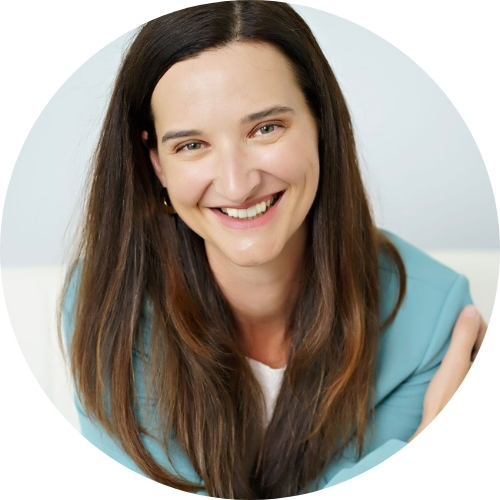
Hélène Thériault, BScOT, MAdEd, MCC
Master Certified Coach (top 3% globally) · 23+ years as OT · UBC Clinical Instructor since 2018 · ICF Emerging Coach Educator Award 2023
Hélène isn't a business coach who stumbled into healthcare. She's a Registered Occupational Therapist who spent two decades in clinical practice before becoming one of fewer than 1,200 Master Certified Coaches in the world.
She built Dive Into a Coach Approach® because she lived the burnout. She watched colleagues leave the profession. And she discovered that coaching skills were the missing piece.
Since 2017, over 1,000 healthcare professionals have gone through this training. It's been featured at AOTA Conference, CAOT Conference, and delivered at UBC.
This isn't theory from someone who's never treated a patient. It's battle-tested methodology from the trenches of healthcare.
This Training Counts Toward Your Continuing Education
DICA 1 is fully accredited. You'll earn 12 continuing education hours recognized by:
You'll receive a detailed Certificate of Completion with learning objectives and instructor credentials—everything you need for your professional organization.
Here's Everything You Get
Dive Into a Coach Approach® Level 1: Core Fundamentals
- 12 hours of self-paced video training
- The Coaching Spectrum Framework™
- 10 Core Techniques with practice exercises
- DIVE IN Goals™ proprietary framework + worksheet
- 4 Mindset Principles deep-dive
- Real healthcare case studies & scenarios
- Certificate of completion
- 12 hours—accredited: ICF, AOTA, NBHWC
- 1-year access to course materials
Value: $1,200+
$595
One-time investment · 1-year access
Secure checkout · Instant access
The "Try It With Real Patients" Guarantee
Go through Module 1. Try the techniques with your next few patients. If you don't see a difference in how they engage—if you're not convinced this will transform your practice—email us within 14 days for a full refund. No hoops. No hassle. We've trained over 1,000 professionals; we know this works.
Still Have Questions?
I only have 15-minute appointments. Will this work for me?
Absolutely. Dr. Alexa Dykun (chiropractor) implements the Coach Approach in 15-minute appointments daily. The techniques are designed to integrate into real healthcare constraints, not replace them.
Is this different from motivational interviewing?
Yes. Motivational interviewing was developed for addiction counseling. The Coach Approach was built specifically for healthcare professionals who need to balance coaching with clinical expertise. You get a clear framework for when to do each.
I'm not an OT. Is this relevant for my profession?
DICA 1 has been completed by OTs, PTs, nurses, chiropractors, kinesiologists, nutritionists, and SLPs. The principles apply to any healthcare professional who works with patients on behavior change and goal achievement.
How long do I have access?
You have 1-year access to all course materials. Go at your own pace, revisit modules whenever you need a refresher. Graduates can continue access through the DICA Grad Membership.
What if I want to continue to higher levels?
DICA 1 is the foundation. After completing it, you can continue to DICA 2A (Relationship Mastery), 2B (Technical Mastery), and beyond—all the way to ICF credential readiness if you choose.